National platform for bailiff auctions
Portal obwieszczeń i licytacji komorniczych. The system the National Council of Bailiffs uses to announce and auction property seized in enforcement proceedings across Poland.
TL;DR
Two separate systems — one for announcements, one for e-auctions — became a single national platform. Research with bailiffs and office staff led me to propose a new model for creating auctions, cutting that process by up to 65%.
Context
Every bailiff in Poland publishes announcements and runs auctions of seized property — real estate and movables — through one national service. Historically that service was two products: an announcements portal built in .NET and an e-auction system built in Java, each with its own logic, interface and workflow.
That split was felt on both sides: by bailiff offices preparing auctions, and by the public looking for and bidding on property. The redesign had to bring traditional and electronic auctions together without disrupting a live legal process.
Discovery & research
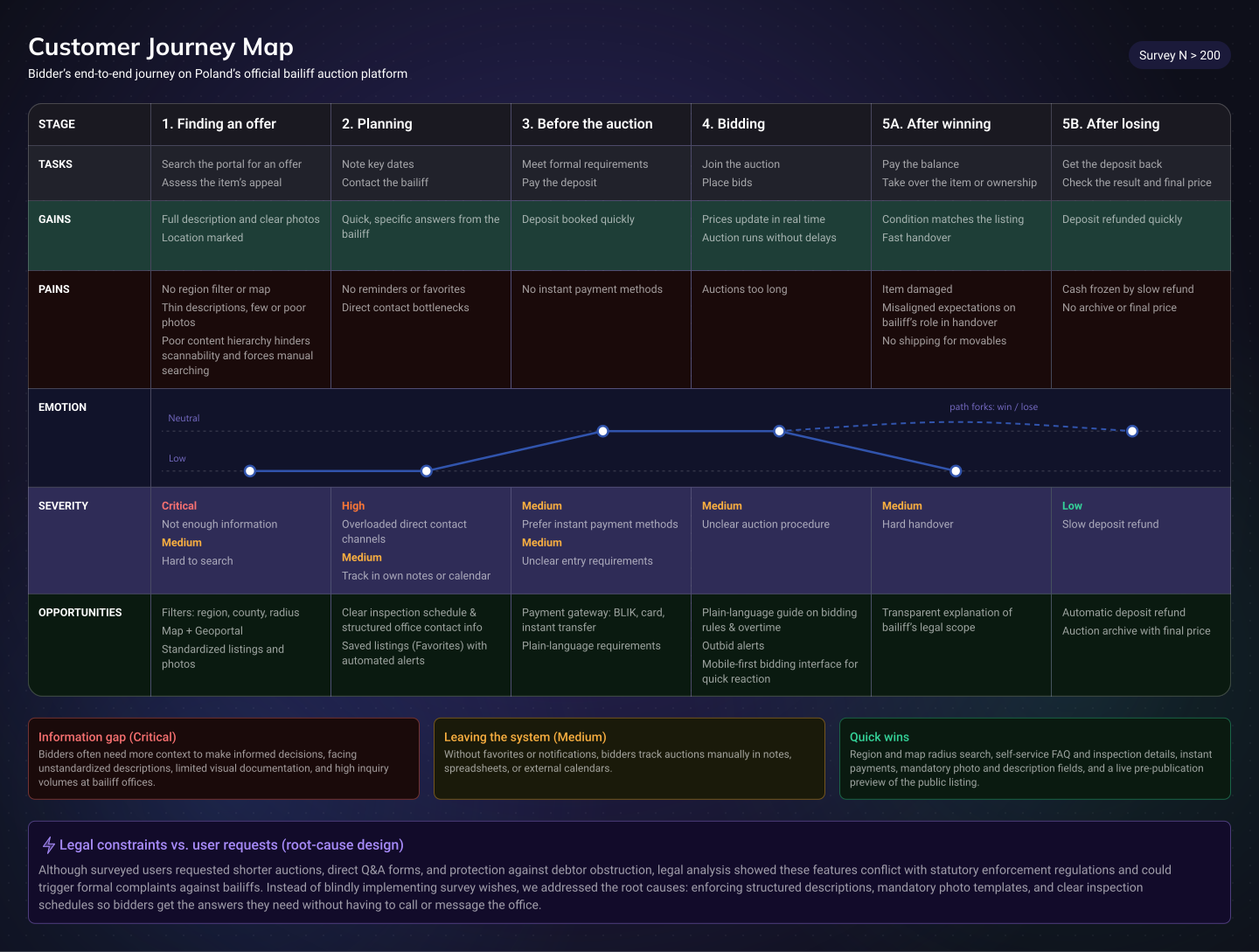
I ran the research process end to end. Its findings shaped design decisions across the whole redesign.
Public portal: helping bidders decide
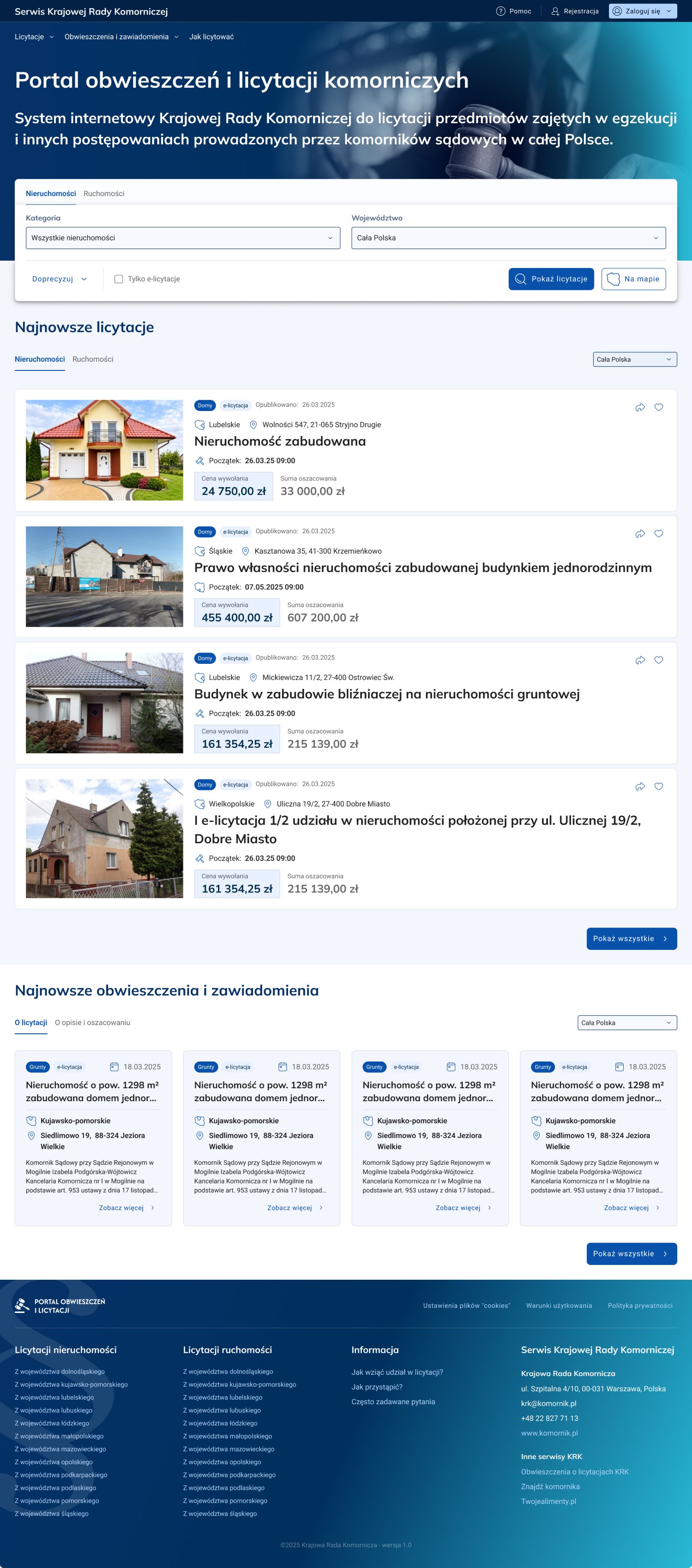
The redesign focused on structuring the information architecture, improving the scannability of financial data, and providing a more robust search experience to reduce user friction.
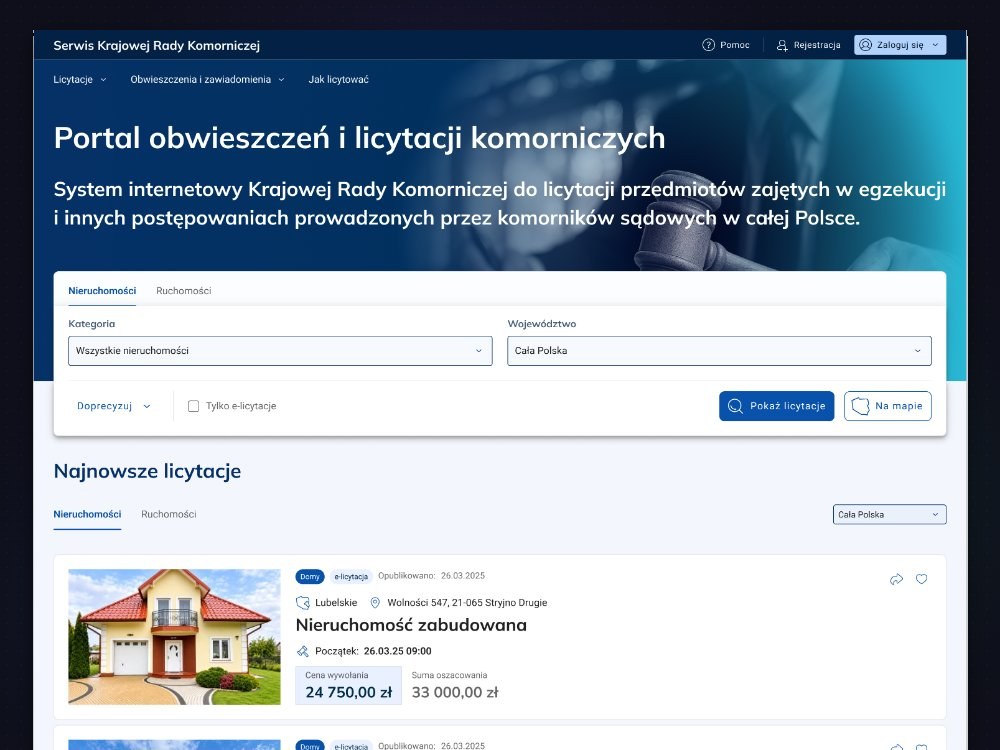
Homepage & search experience
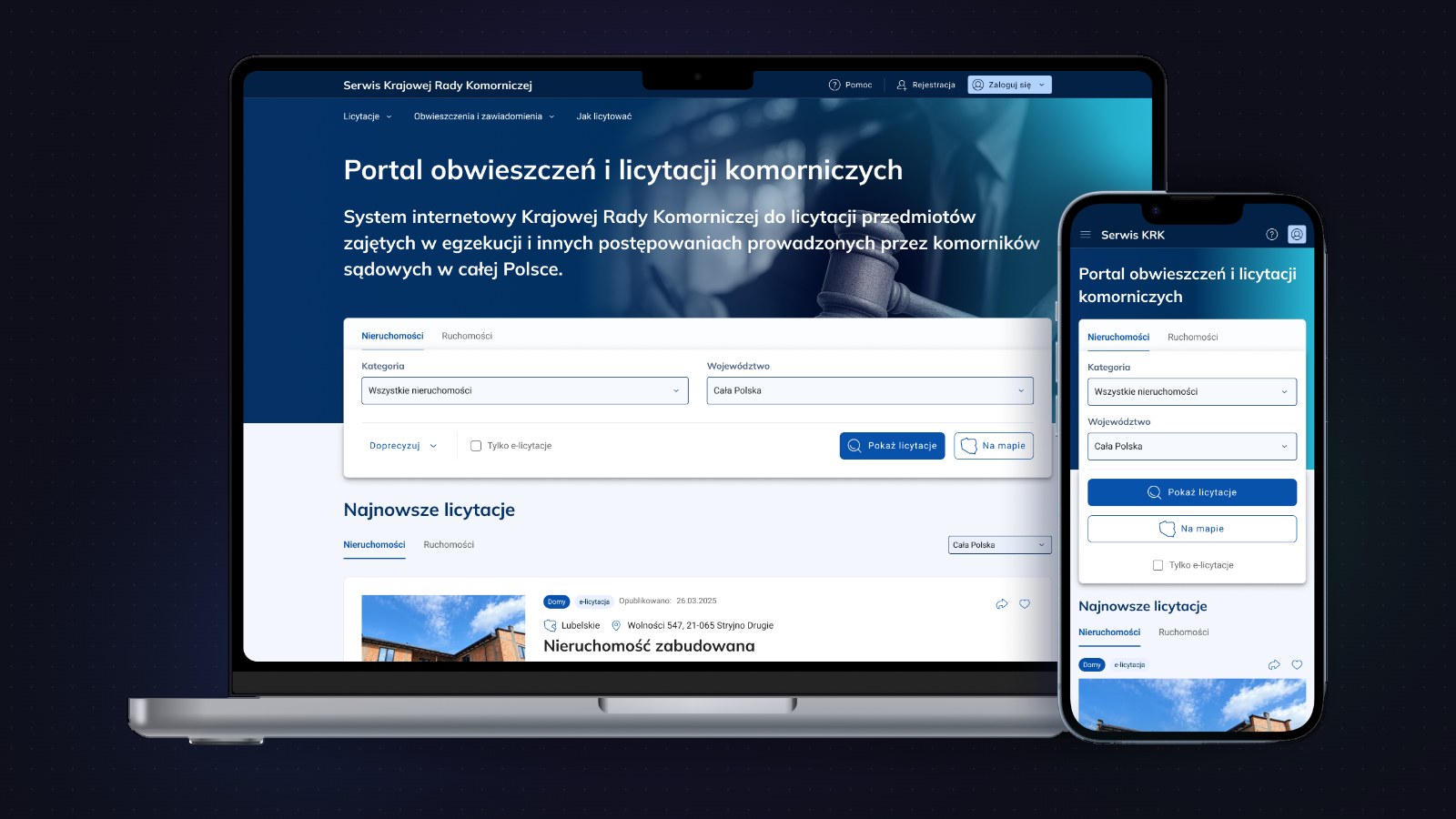
Upgraded the main search from a basic text input to a comprehensive widget, with dedicated tabs for real estate and movables and dropdown filters for categories and regions.
Advanced list view & filtering
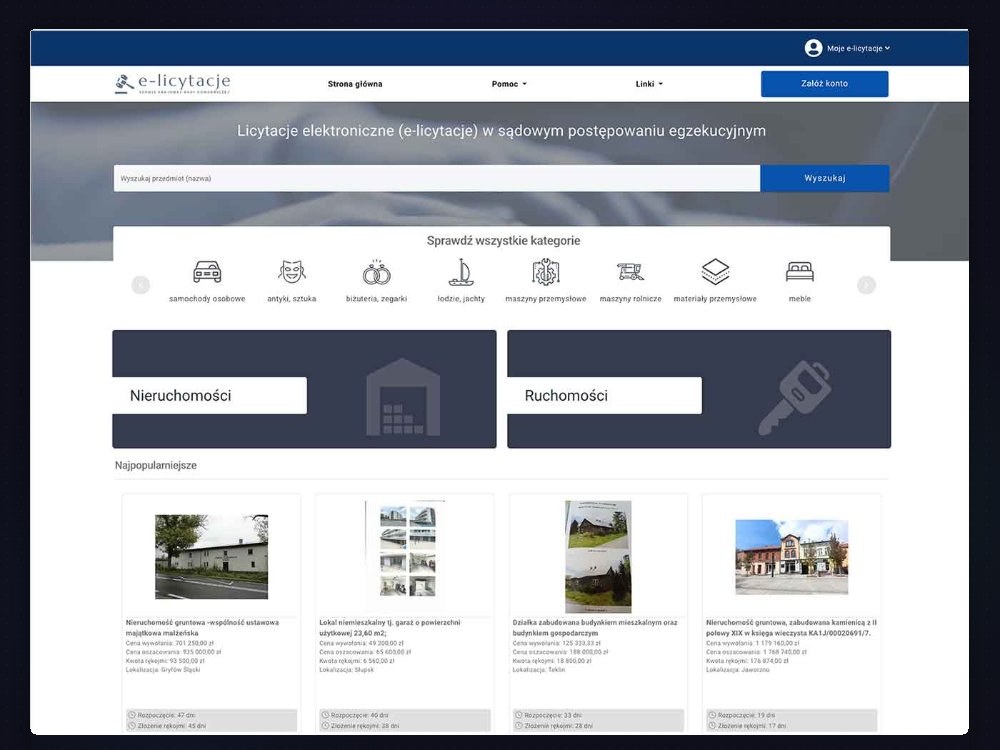
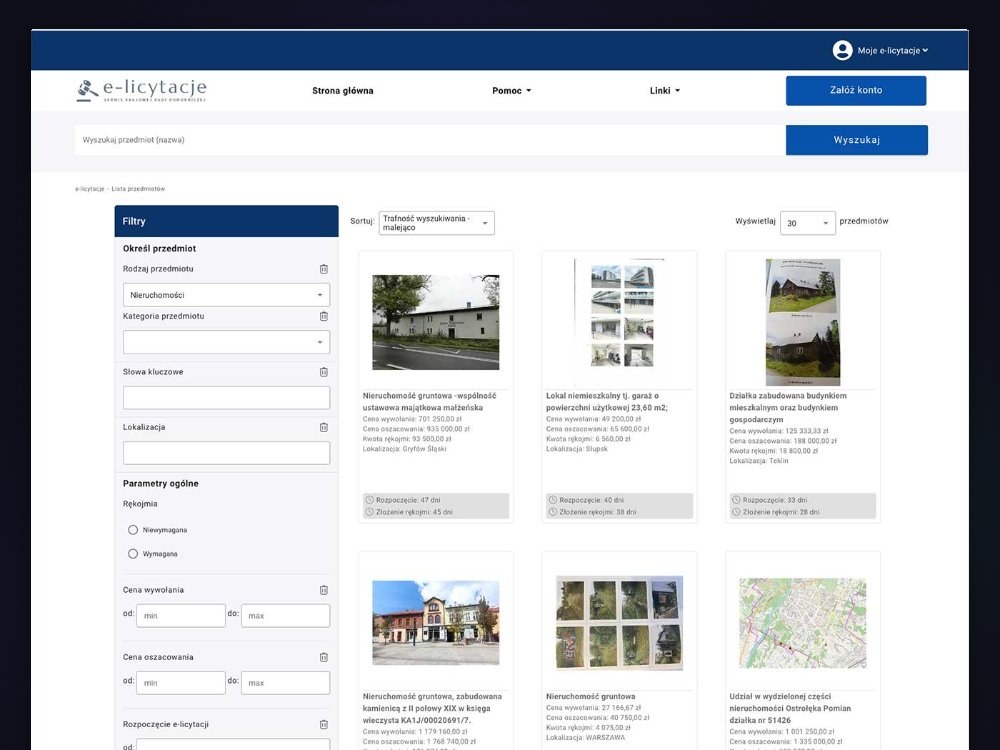
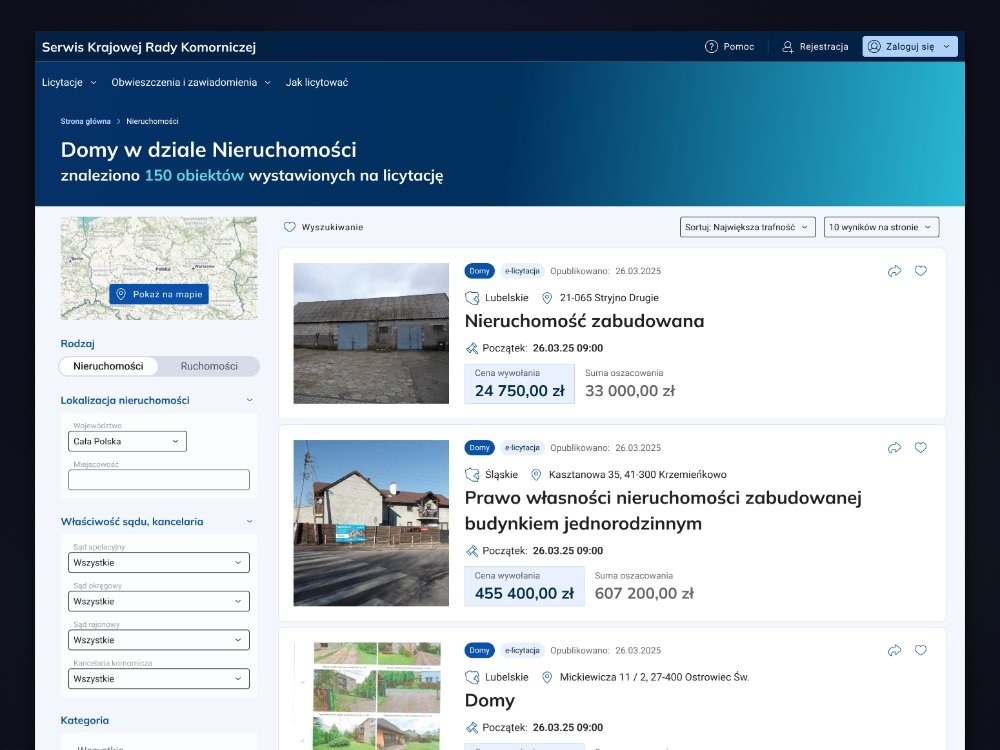
Transformed the results page with advanced sidebar filters, including specific property parameters and map integration
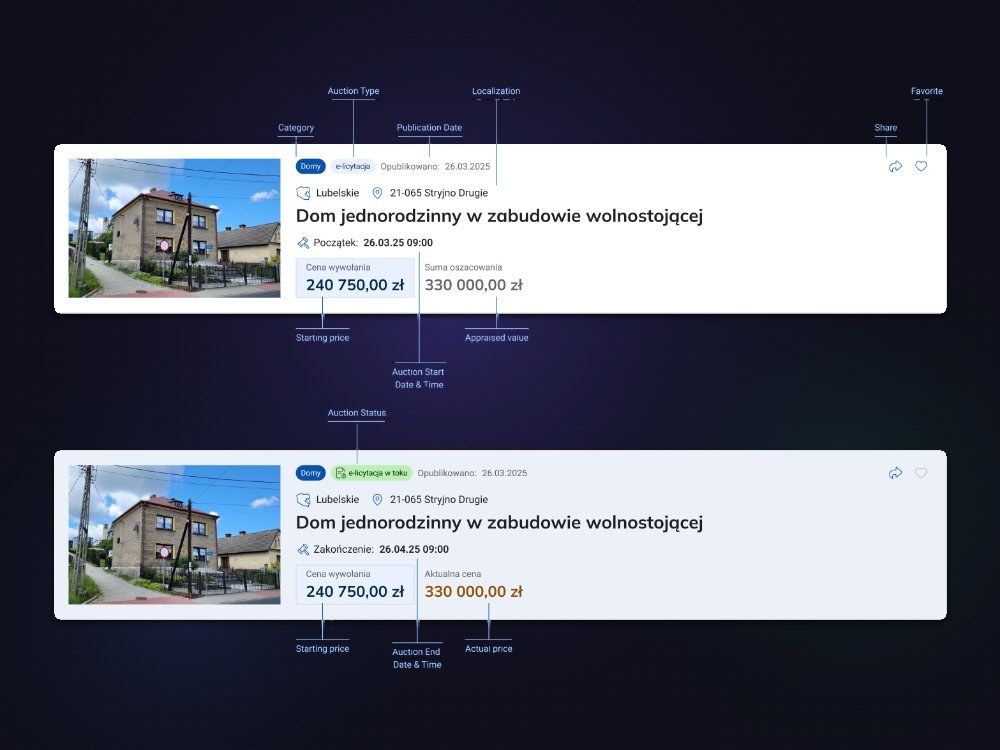
Auction card & data hierarchy
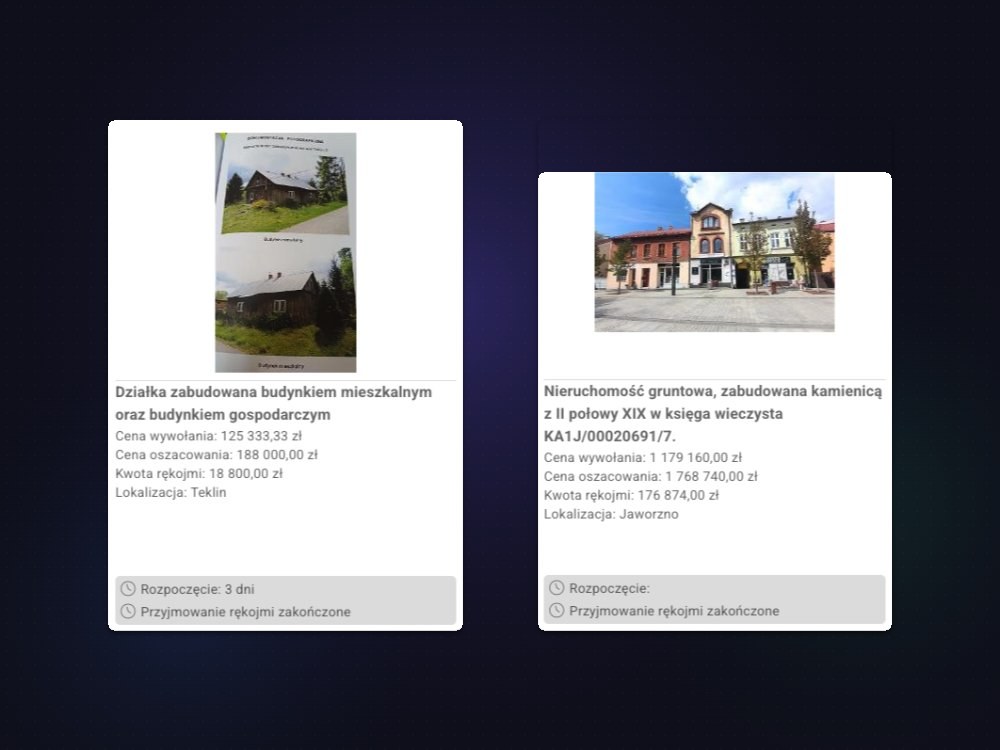
Separated the starting price from the appraised value and highlighted the starting price for instant scannability. Shifted to a horizontal layout with visual tags, icons and accessible quick actions like Share and Favorite.
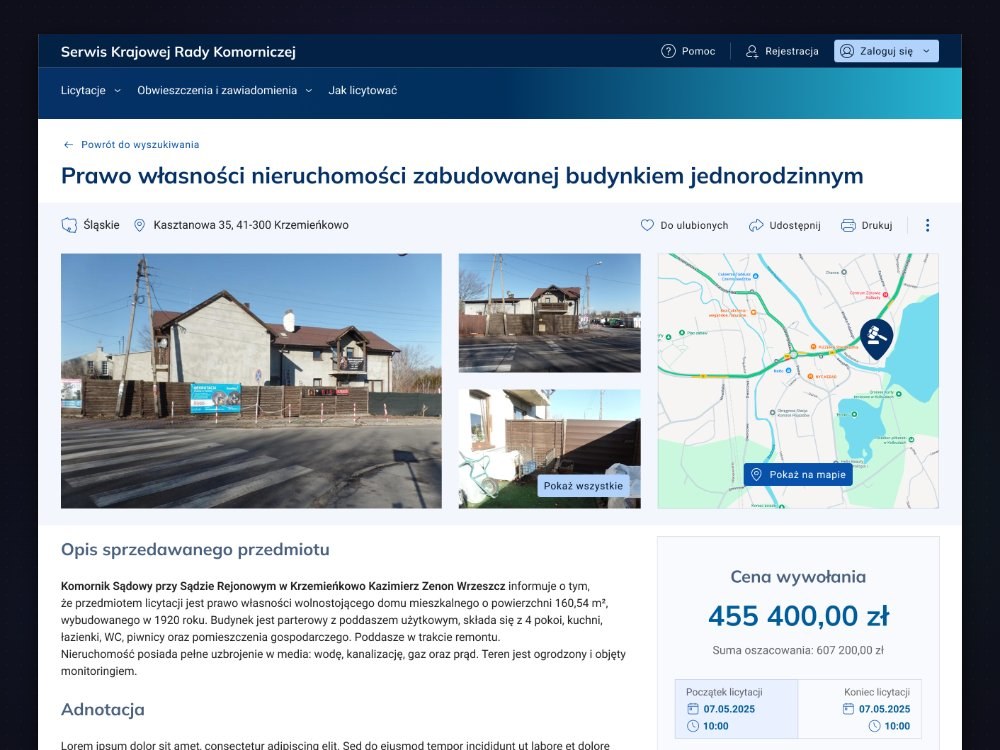
Item details & information architecture
Turned unstructured walls of text into clear data tables and categorized sections. Moved critical financial data and the primary CTA, Join auction, to a highly visible sidebar. Added a top photo gallery for immediate visual context, an integrated FAQ and related listings from the same office.
Back office: a new way to create auctions
Research showed where office staff lost the most time: preparing auctions and announcements. I proposed a new creation model for bailiff offices and won support for it from the client and the product team, cutting the process by up to 65%.
The biggest gain didn't come from a better screen. It came from changing the model behind it.
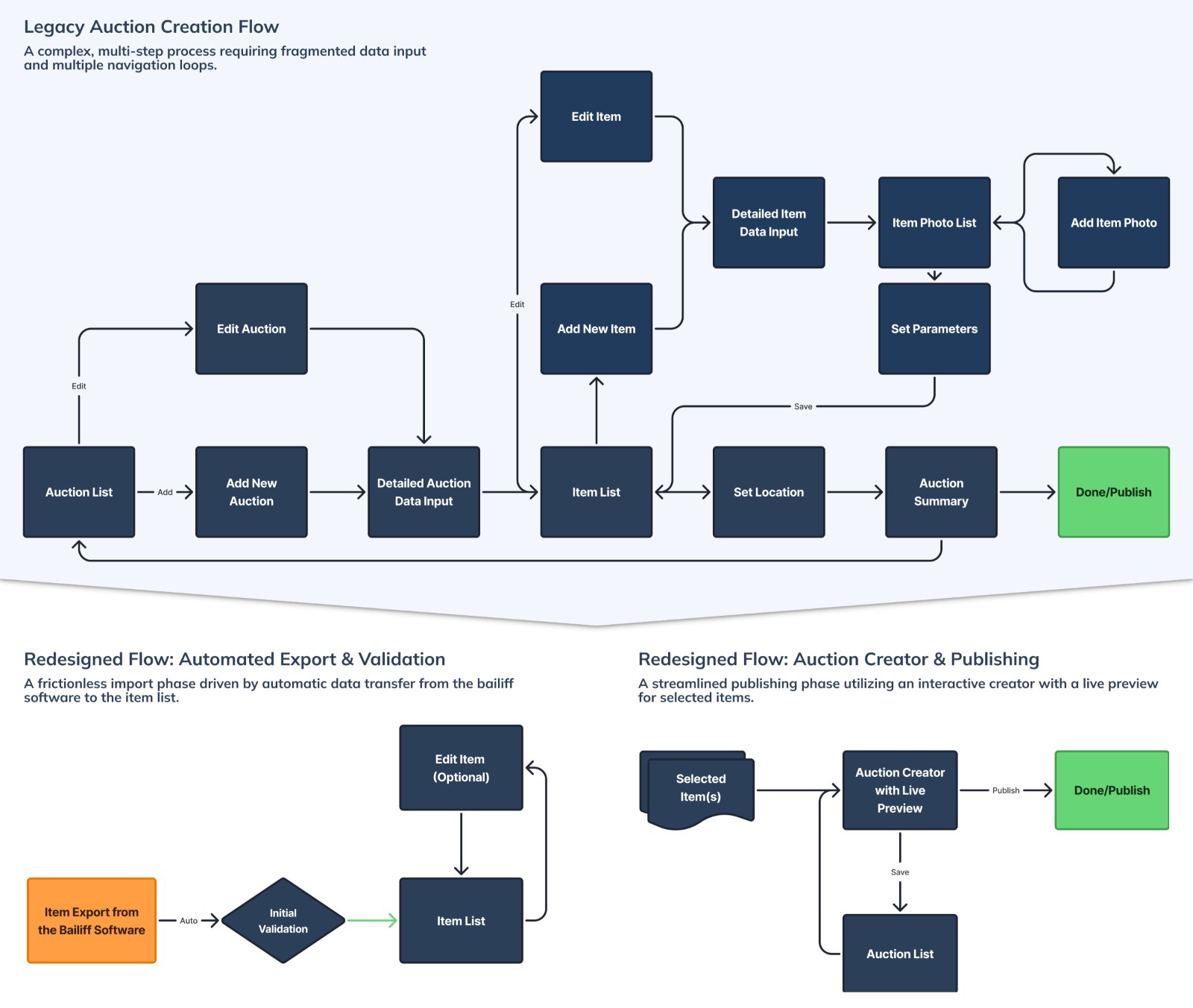
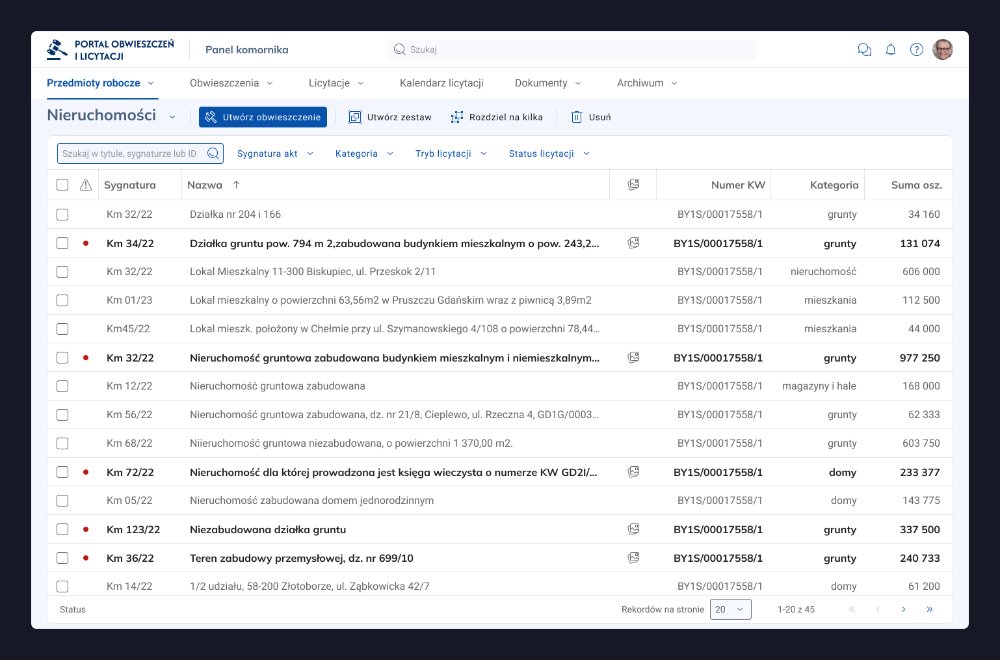
Streamlined flow: from manual entry to automated export
Replaced a convoluted, multi-page registration form with a two-step process. First, items are exported directly from the bailiff software to a working drafts list, where staff can optionally edit individual item details in a simple form. Second, they select the items and launch the creator. The system maps the item data automatically, so creating the announcement comes down to filling in dates and basic parameters.
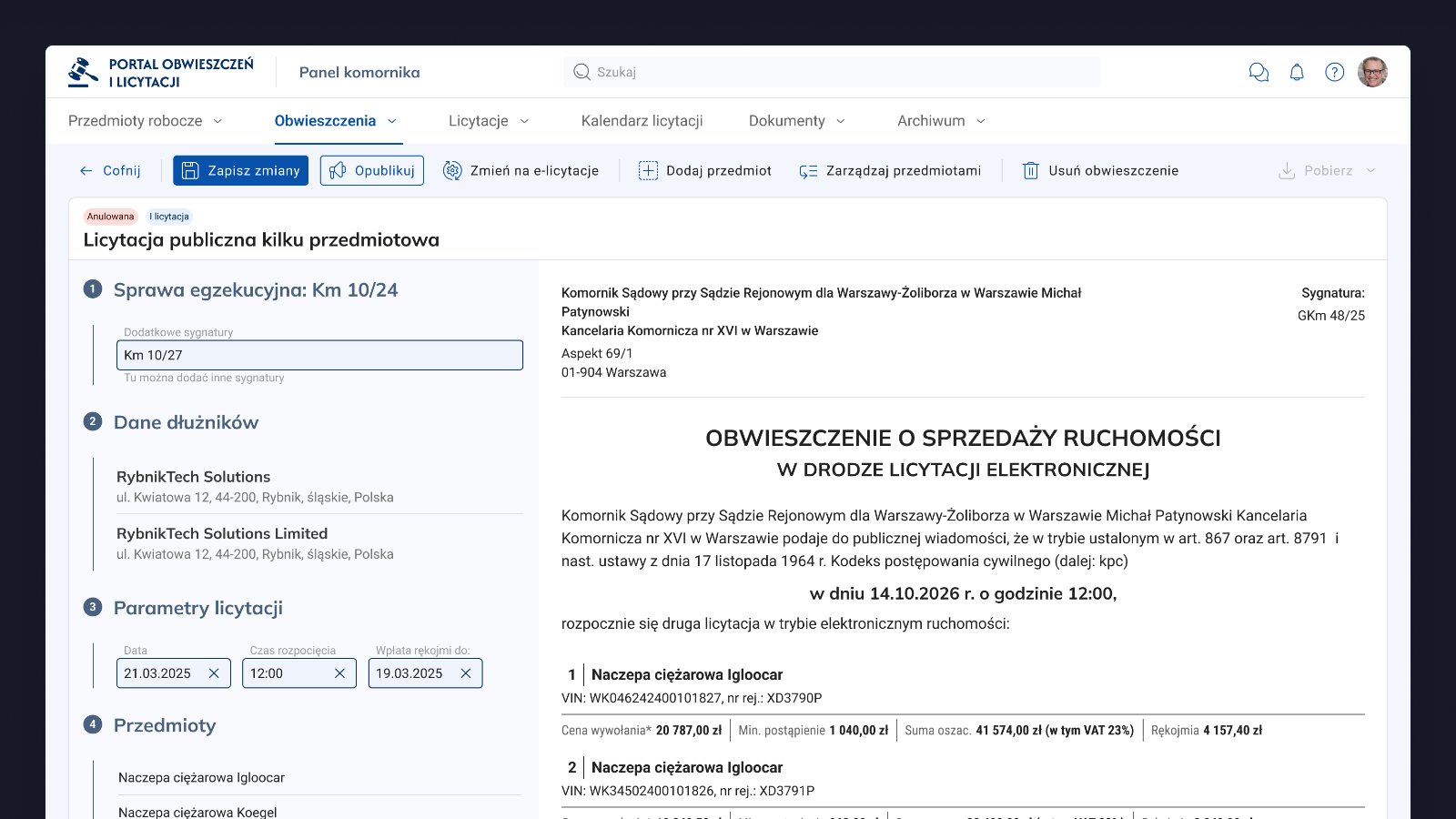
Live-preview creator
Previously, staff saw the announcement only at the very end of the process. The new creator uses a split screen: a parameter form on the left and a live preview of the auction announcement on the right. Any change to items or dates is reflected in the document instantly.
UI standardization
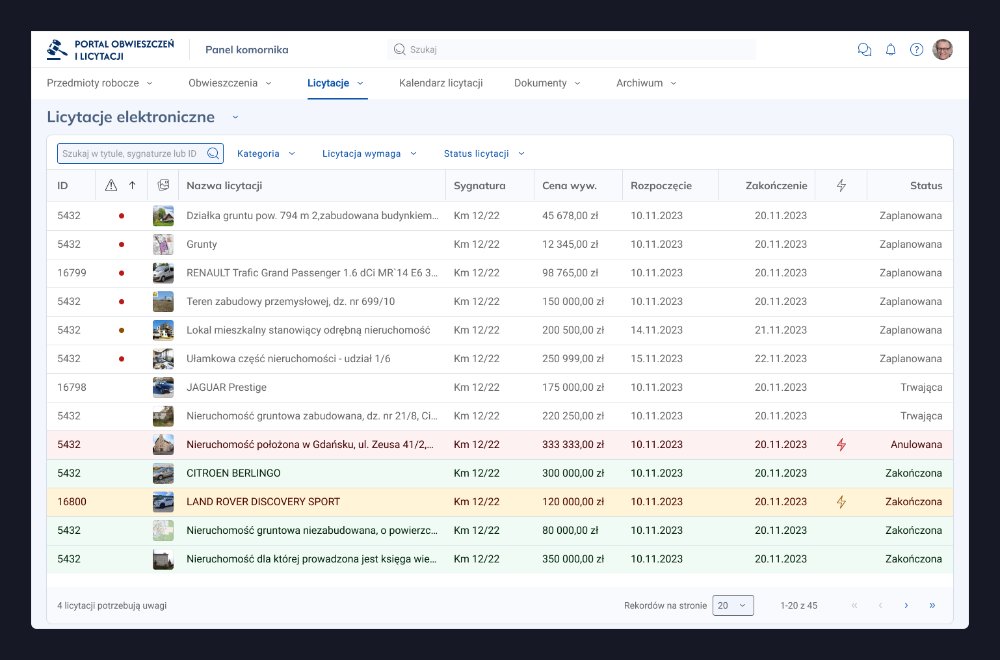
Introduced a consistent visual language across the system. Standardized views and components, from item tables and edit forms to the creator and the final e-auction list, lowered the cognitive load for office staff.
Merging two systems
We designed the merged processes together with architects, business, and developers, so every flow worked within the constraints of both the .NET and Java systems. My engineering background meant we could discuss trade-offs in their language.
Throughout development I worked with the product team, from business meetings and scoping to refinements and reviews, and ran workshops with key clients to present and validate concepts.
Prototyping & delivery
I created interactive prototypes in Figma and Make, leveraging AI to accelerate concept work, research synthesis, and UX writing. The interface was built using the company's internal design system, which I developed together with my lean UX team. This ensured the product remained natively compliant with WCAG 2.1 AA accessibility standards from the ground up. Throughout the Agile/SAFe development cycle, I prepared detailed handoff specs in Figma, Jira, and Confluence, and conducted Design QA on every release to ensure exact implementation.